

RUAHA
Ruaha National Park, located in the heart of Tanzania, is a true gem of the African continent. Covering an area of approximately 20,226 square kilometers (7,809 square miles), the park is one of the largest national parks in Tanzania and offers a truly wild and untouched safari experience. Renowned for its picturesque landscapes, diverse wildlife, and rich cultural heritage, Ruaha National Park stands as a testament to the importance of conservation in preserving our natural world.
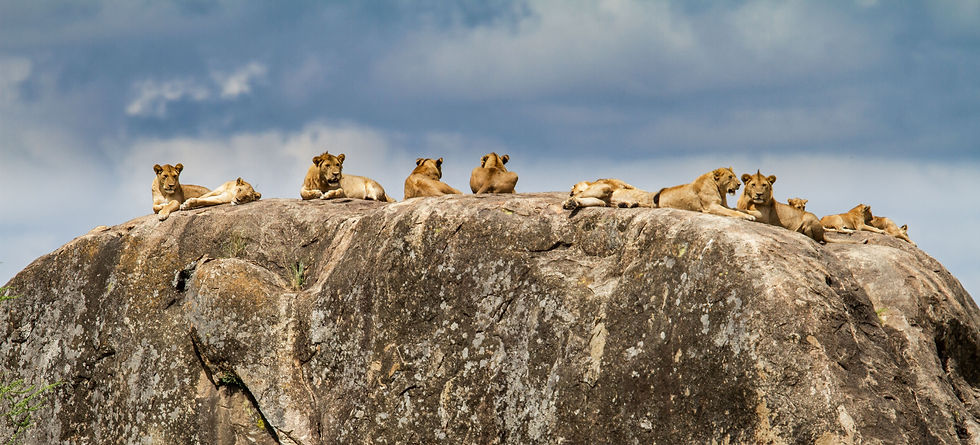
Ruaha National Park's geography is characterized by a unique blend of dry savannah plains, rugged mountains, and winding rivers. Its diverse topography creates a myriad of habitats, giving rise to an astonishing range of flora and fauna. The park is home to over 570 bird species, making it a paradise for birdwatchers. Additionally, Ruaha boasts an impressive array of elephants, lions, leopards, cheetahs, giraffes, zebras, hippos, crocodiles, and more. It is also one of few parks within the continent where the greater and lesser kudu coexist. The Great Ruaha River, which runs through the park, provides a vital water source, attracting large herds of animals during the dry season.
Beyond its natural beauty, Ruaha National Park also holds immense cultural significance. The park lies within the traditional lands of the Gogo and Hehe tribes, who have inhabited the area for centuries. These communities have a deep connection to the land and its wildlife, with cultural practices and traditions that revolve around conservation and sustainable resource use. Visitors to the park have the opportunity to engage with local communities, learn about their way of life, and appreciate the importance of preserving cultural heritage alongside biodiversity.


